Verruca (Plantar Wart) Treatment in Almere
A verruca (plantar wart) is a benign skin condition caused by the human papillomavirus (HPV). On the sole of the foot it can become quite painful, because walking presses it inward. At my practice in Almere I assess and treat verrucas in a targeted way, and explain how to prevent them from spreading.
In short
- A verruca is caused by a virus (HPV) and can hurt when walking.
- Sometimes it looks like a corn — a correct assessment is important for the right treatment.
- Treatment is targeted and often needs several sessions and some patience.
- Good hygiene prevents spreading to yourself and housemates.
Verruca or corn — what is the difference?
A verruca and a corn are easily confused, but the approach differs. A wart often has tiny black dots (the tips of small blood vessels) and hurts when squeezed from the side. A corn has a smooth, hard core and hurts mainly under direct pressure from above.
Because the treatment differs, I first assess carefully what it is exactly before we start.
How do I treat a verruca?
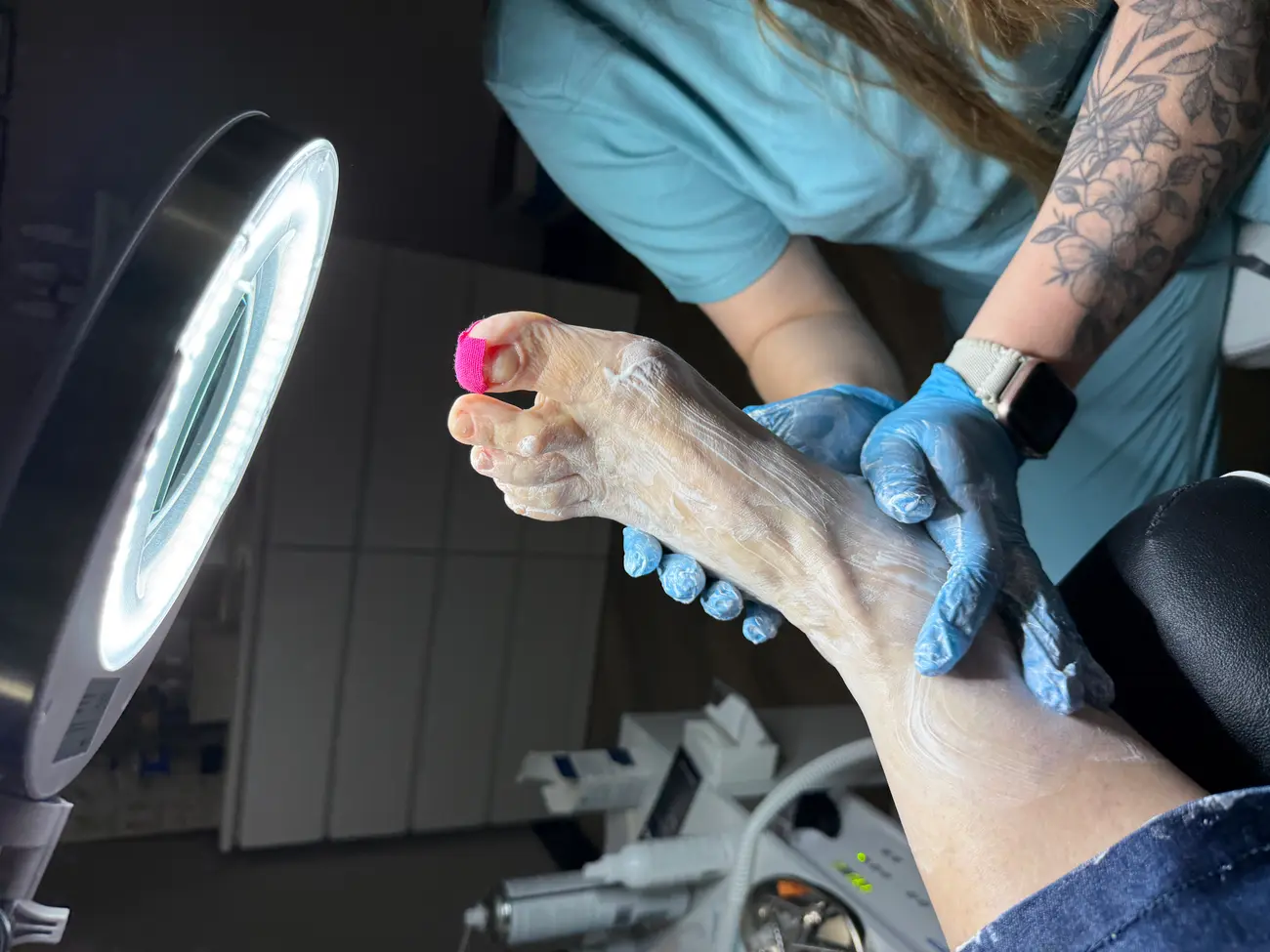
I first carefully remove the callus over the wart so the treatment works better. Then I treat the wart in a targeted way — chemically or chemo-mechanically — and give you clear instructions for home care.
Warts are stubborn: often several appointments are needed before the wart disappears completely. The immune system plays a large role, so patience is part of it.
Preventing spread
HPV is contagious via moist surfaces. Do not walk barefoot in the swimming pool, sauna or shared shower, use your own towel and socks, and touch the wart as little as possible. Cover the wart during sports.
Do not treat the wart with the same file or clipper you use for healthy nails — this prevents spreading to other toes.
When should you book an appointment?
Have a wart assessed if it hurts, grows, spreads or does not disappear on its own over time. If you have diabetes or reduced immunity, never treat it yourself with over-the-counter products, but leave it to a specialist.
Verrucas and plantar warts — Almere and Flevoland
A verruca (a plantar wart caused by the HPV virus) is treated at my practice in Almere, at Kabelstraat 1. Clients travel in from across Flevoland — from Lelystad, Dronten and Zeewolde.
Verrucas are often mistaken for a corn. The test is simple: a corn hurts under direct downward pressure, a verruca hurts more when squeezed from the sides, and you can often see dark pinpoints in the centre — clotted capillaries. Verrucas are contagious, so the sooner we deal with them, the lower the chance of more appearing or of passing them to people you live with. Swimming pools, shared bathrooms and walking barefoot are the most common routes of infection.
Frequently asked questions
Your questions about this treatment answered
Sometimes it does, because the immune system clears the virus, but that can take a long time. A painful, growing or stubborn wart is better treated.
This varies greatly. Warts are stubborn; often several sessions a few weeks apart are needed.
It is usually well tolerated. Removing the callus is painless; the targeted treatment may sting slightly or be sensitive.
Be careful, especially with diabetes or reduced immunity. Over-the-counter products can damage healthy skin. Better to have the wart assessed first.