An ingrown toenail (unguis incarnatus) is one of the most common reasons people visit my foot care and (medical) pedicure practice in Blaricum. It often starts innocently — a slight pressure on the side of the big toe — but within a few days it can turn into a red, swollen, throbbing toe that makes every step and every shoe uncomfortable. The good news: in most cases this can be resolved quickly, safely and almost painlessly.
In short
- The ingrown nail edge presses into the skin and triggers inflammation — sometimes with discharge or pus.
- Treatment is usually completed in a single appointment lasting around 30–45 minutes.
- For recurring problems I fit a nail brace that permanently corrects the direction of growth.
- Don't wait for pus or fever — the sooner you come, the simpler the treatment.
What is an ingrown toenail?
We speak of an ingrown nail when the side edge of the nail plate grows into the surrounding skin (the nail fold) instead of over it. The skin responds with redness, swelling and pain, and if the problem persists an inflammation with discharge or pus develops. The big toe is most often affected.
The causes are almost always a combination of factors: cutting the nails too short or too rounded, tight or pointed shoes, an inherited strongly curved nail shape, sweating and sometimes a previous injury to the toe. With diabetes or circulation problems, every ingrown nail deserves extra caution.
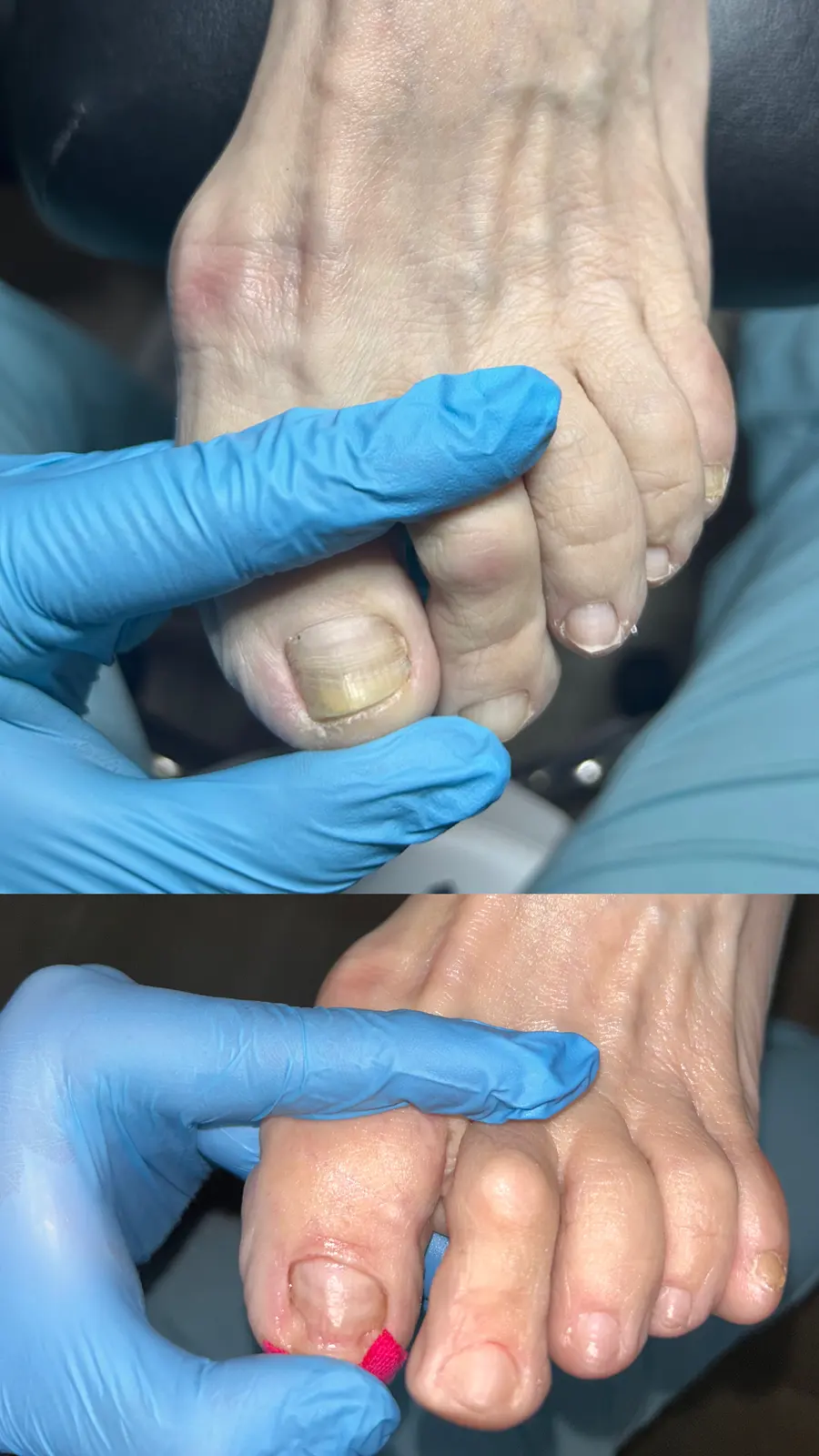
How does the treatment work?
I always start with a calm conversation and an examination of the toe to assess how far the nail has grown in and whether there is inflammation. I then soften the skin and the nail fold so I can reach the ingrown part without unnecessary pulling.
Using sterile podology instruments, I gently remove the sharp splinter or ingrown section of the plate that is digging into the skin. I clean the swelling and any overgrown tissue, then apply a relieving, antiseptic dressing. Most patients feel a clear release of pressure while still in the chair.
What to expect after the treatment
Right after the appointment, walking is usually comfortable again. For the first few days I recommend open or roomy footwear and, if needed, short soaks in lukewarm salt water. The redness normally subsides within a few days. I explain exactly how to cut and care for the nail afterwards, so the problem does not return.
The nail brace — a lasting solution
If the same toe grows in again and again, I treat not only the symptom but also the cause: the direction in which the nail grows. A thin, individually fitted nail brace gradually lifts the side edges so the plate grows flat again. The brace is discreet, often provides immediate relief and stays in place during normal daily activities.
When should you book an appointment?
It is better to come too early than too late. Book an appointment when the toe is red and painful, when pus or discharge appears, when the same nail grows in for the second or third time, or when the pain prevents walking or wearing shoes. If you have diabetes, neuropathy or reduced circulation — do not experiment yourself and always have the toe assessed by a specialist.