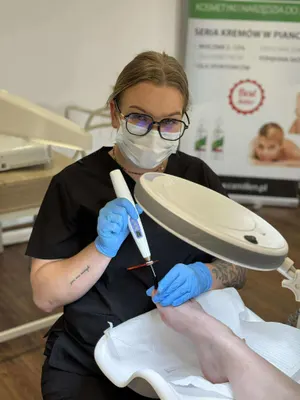
As a podologist in Blaricum, I see the same scenario in my practice every day: a patient comes in with a painful, red toe and says "but I trim my nails regularly". And that is exactly the problem — it is not about how often you do it, but how you do it. Ingrown nails are one of the most common foot complaints and account for around 20% of foot-related visits in primary care. And in the vast majority of cases, it can be prevented with a few simple habits.
In this guide I explain step by step how to trim toenails correctly, what mistakes to avoid and when it is better to see a specialist.
Key points at a glance
- Trim toenails straight across, not curved, leaving 1–2 mm of free white edge.
- Do not round the corners and do not cut wedge shapes — these are the two main mistakes that lead to ingrown nails.
- Trim them less often than fingernails — usually every 6–8 weeks, ideally after a bath.
- You can treat mild early symptoms at home, but pus or pain that prevents walking is a signal to visit a specialist.
- If you have diabetes, neuropathy or circulation problems — do not experiment on your own.
Why toenails need a different approach than fingernails
Many people transfer their manicure habits to foot care, and this is where problems begin. Toenails differ from fingernails in almost every way.
First of all, they grow much more slowly — on average about 1.6 mm per month, more than twice as slow as fingernails. Full regrowth of the big toenail takes 12 to 18 months. So there is no need to trim them every week — once every six to eight weeks is enough.
They are also noticeably thicker. For feet you need a stronger, wider tool, not a delicate finger nail clipper. And most importantly: if you shape the nail in a curved arch as with a manicure, the side corners end up below the edge of the nail fold and will start digging into the skin as the nail grows. That is the mechanism of ingrown nails in a nutshell.
How to trim toenails correctly — step by step
The whole technique comes down to one rule: straight, not too short, no digging in the corners. Here is what it looks like in practice:
- Wash your hands and disinfect the tools. Wipe clippers with 70–90% isopropyl alcohol before each use.
- Soften the nails. The best time is right after a bath or 5–10 minutes of soaking in warm water.
- Dry feet thoroughly, especially between the toes.
- Cut straight, in small steps. Position the clippers perpendicular to the axis of the toe and work across in small cuts. Small cuts prevent the nail plate from splitting.
- Leave 1–2 mm of free edge. The nail should reach to the tip of the toe — the corners should be slightly visible above the skin line.
- Smooth the edge with a file. Use a glass or paper file, working in one direction — this is smoothing, not digging.
- Moisturise. Finally, massage in a urea cream, avoiding the spaces between the toes.
The most common mistakes that lead to ingrown nails
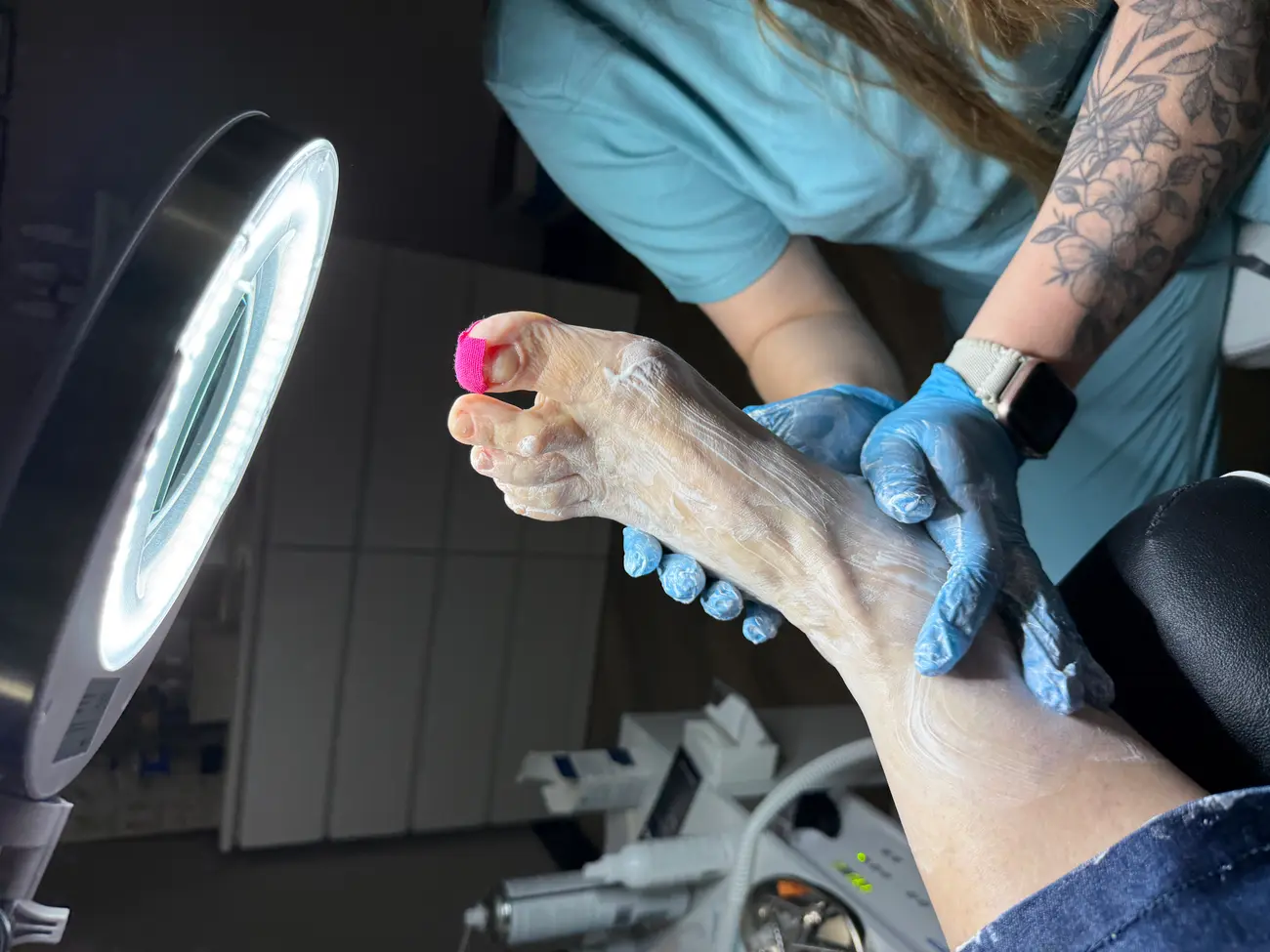
- Cutting too short. When the nail is no longer supported from below, the side edges shift into the skin.
- Rounding the corners. This removes the nail's resistance and creates a curved growth path straight into the nail fold.
- Cutting in a curve as in a manicure. After several such sessions the nail starts to arch and curl excessively.
- Cutting wedge shapes at the sides. This is the most dangerous habit — it leaves a sharp keratin splinter pressing into the skin like a nail.
- Biting and tearing nails. Creates jagged edges and damages the matrix.
- Using a finger clipper on thick toenails. The narrow blade crushes the nail plate instead of cutting it cleanly.
Which tools to choose
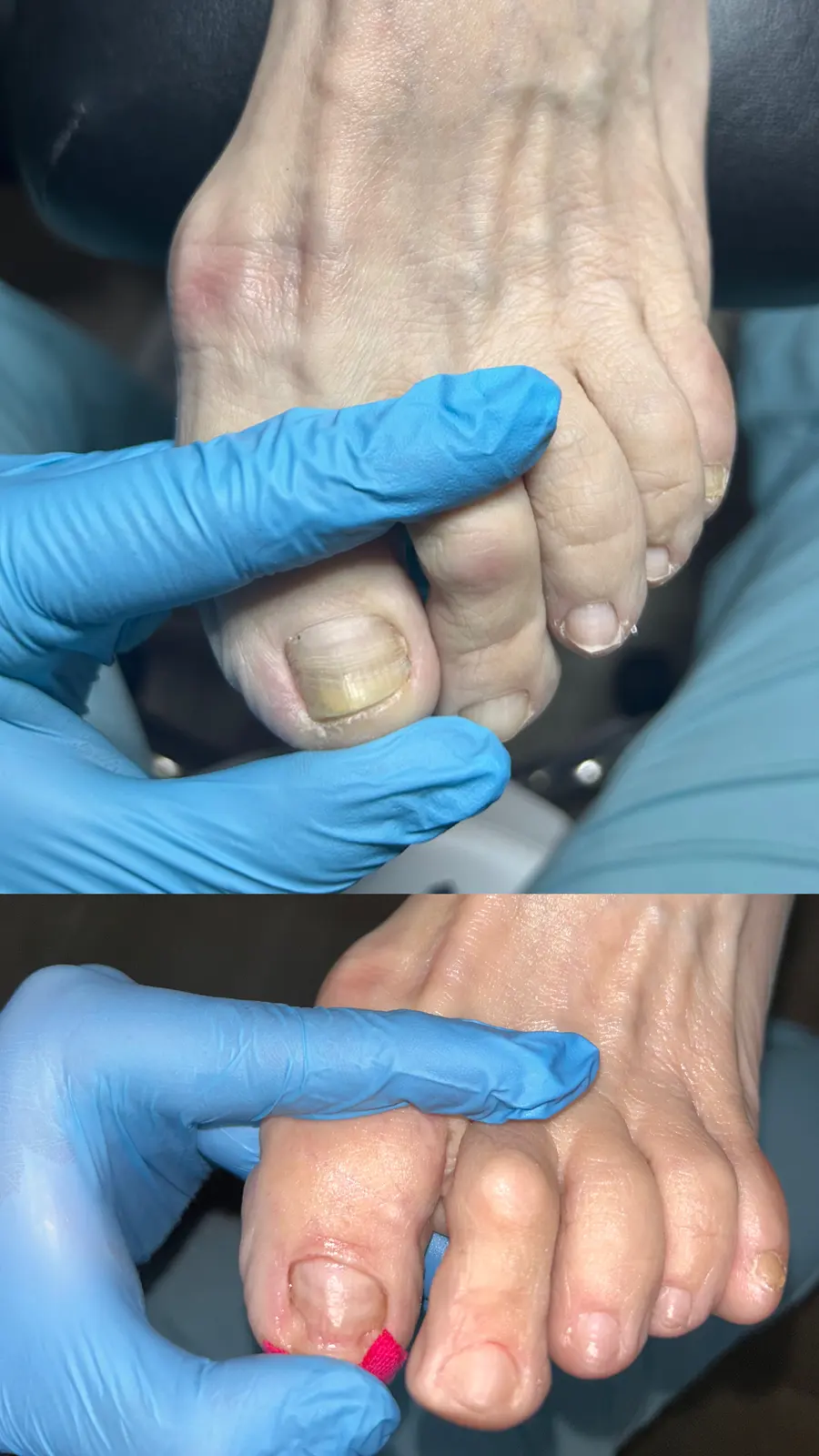
For most adult feet, wide podological clippers made of stainless steel with a solid lever mechanism work best. For small corrections, straight scissors are good. Leave the classic narrow clipper for fingernails.
Choose a glass or paper file — a metal one delaminates the keratin. Do not share tools with household members and replace them when the blades become blunt.
Ingrown nail — when can you manage at home, when do you need a specialist?
If there is mild redness and pain without pus (early stage), home treatment is usually enough: soaking in warm salt water for 15–20 minutes several times a day and open footwear for a week or two.
See a podologist when:
- there is no improvement after 7–10 days of home treatment,
- pus appears or there is "wild" tissue next to the nail,
- the pain prevents walking or wearing shoes,
- the same toe becomes ingrown for the second or third time,
- you see a dark stripe or a worrying change in nail colour.
High-risk groups
Diabetics and people with neuropathy. The absence of pain sensation and slower healing mean that even a small wound can develop into a serious complication. If you have neuropathy — book regular visits every 6–8 weeks.
Runners and athletes. Repeated impact of the big toe against the front of the shoe leads to harder nails. Well-fitting footwear helps (about 1 cm of free space in front of the longest toe).
Older adults. With age, nails thicken and become brittle. Regular visits with a drill treatment are often the best solution here.
Frequently asked questions
How often should I trim toenails?
Most adults need to do it every 6–8 weeks. Athletes may need to do it more often — every 4 weeks.
Can I cut toenails in a curved shape?
No. Rounding the sides increases the risk of ingrown nails. The safe and neat shape is a straight, even edge with slightly smoothed corners.
Are white spots on nails caused by calcium deficiency?
That is a popular myth. They are most often small microtraumas to the matrix, not a calcium deficiency.